
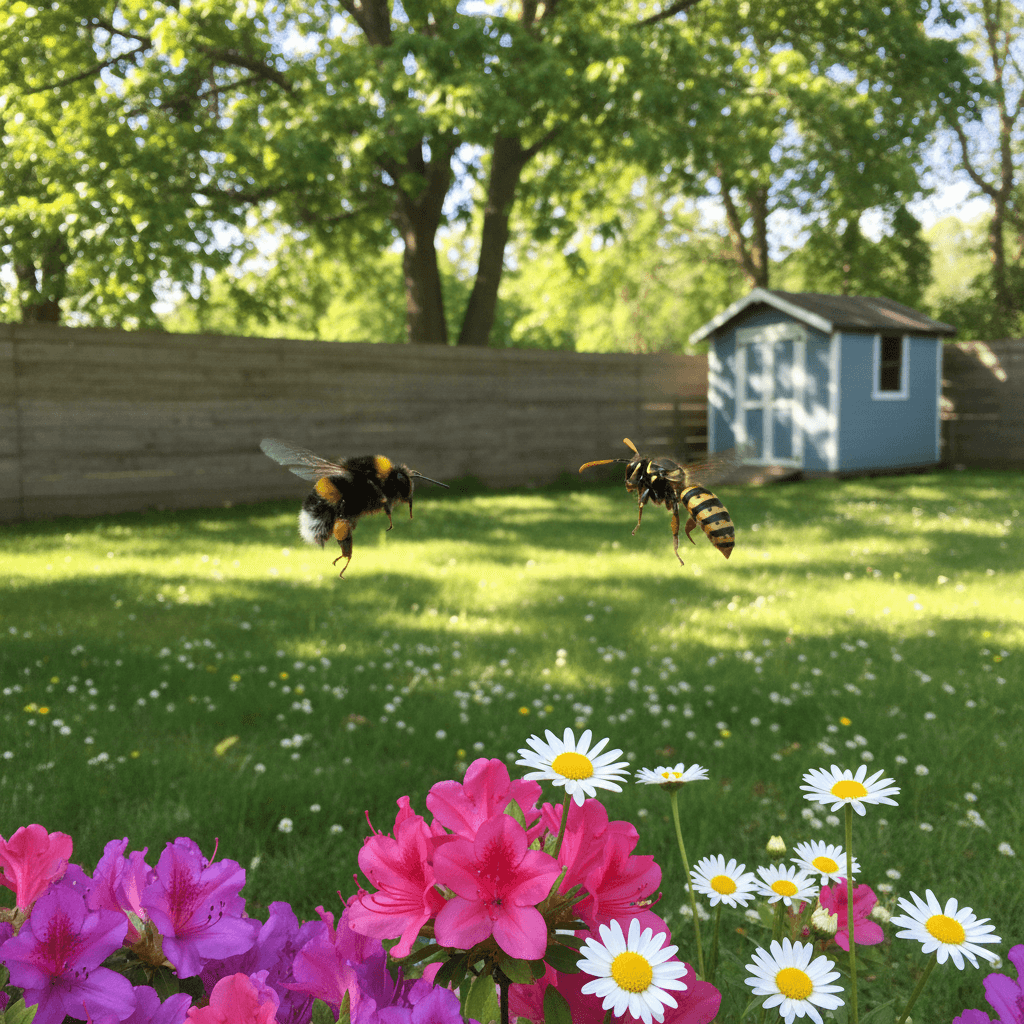
The Buzz on Stinging Insects: How to Identify and Handle Bees and Wasps in Your Yard
As spring blooms in southeastern Pennsylvania, homeowners in Chester County and Delaware County need to be vigilant about stinging insects like bees and wasps. Understanding how to identify these insects and manage their presence in your yard is crucial for maintaining a safe outdoor environment.
Identifying Common Stinging Insects
Bees and wasps can often be confused due to their similar appearances, but they play different roles in our ecosystem. Here’s how to identify the most common stinging insects you may encounter:
- Honey Bees: Typically brown with black stripes, honey bees are fuzzy and are vital pollinators. They are generally non-aggressive unless provoked.
- Bumblebees: Larger than honey bees, bumblebees are also fuzzy and can be yellow and black. They are generally calm and rarely sting unless their nest is threatened.
- Yellowjackets: These wasps are black and yellow, with a more slender body. They can be aggressive, especially in late summer when food sources are scarce.
- Paper Wasps: Recognizable by their long legs, paper wasps are brown with yellow markings. They tend to be less aggressive but will defend their nests if disturbed.
When to Expect Stinging Insects
In southeastern PA, stinging insects typically emerge in the spring, with their activity peaking in late summer. It's essential to monitor your yard during these months for signs of nests.
Signs of a Stinging Insect Nest
Be alert for these warning signs that indicate a potential stinging insect nest:
- Frequent sightings of bees or wasps flying in and out of a specific area.
- Visible nests in trees, under eaves, or in other sheltered locations.
- Increased insect activity around outdoor gatherings or food sources.
Safe Management Strategies
If you find a nest in your yard, consider these safe management strategies:
- Observe from a Distance: If the nest is not in a high-traffic area, it may be best to leave it alone.
- Seal Food Sources: Ensure that food and trash are secured, especially during outdoor events, to minimize attracting these insects.
- Professional Removal: If the nest poses a threat, contact a pest control service like Absolute Pest Services for safe removal.
What to Do Next
Here's a handy checklist to help you manage stinging insects in your yard:
- Identify the type of insect.
- Monitor for signs of nesting.
- Assess the risk based on location and activity.
- Implement management strategies or seek professional help.
- Maintain a clean outdoor environment to deter stinging insects in the future.
Final Thoughts
With the right knowledge and precautions, you can enjoy your yard while minimizing the risks associated with stinging insects. Remember that bees play a crucial role in our ecosystem, so whenever possible, try to coexist peacefully. If you encounter a nest that needs professional attention, don’t hesitate to reach out to Absolute Pest Services at 484-643-2225 for expert assistance.